



BLOG

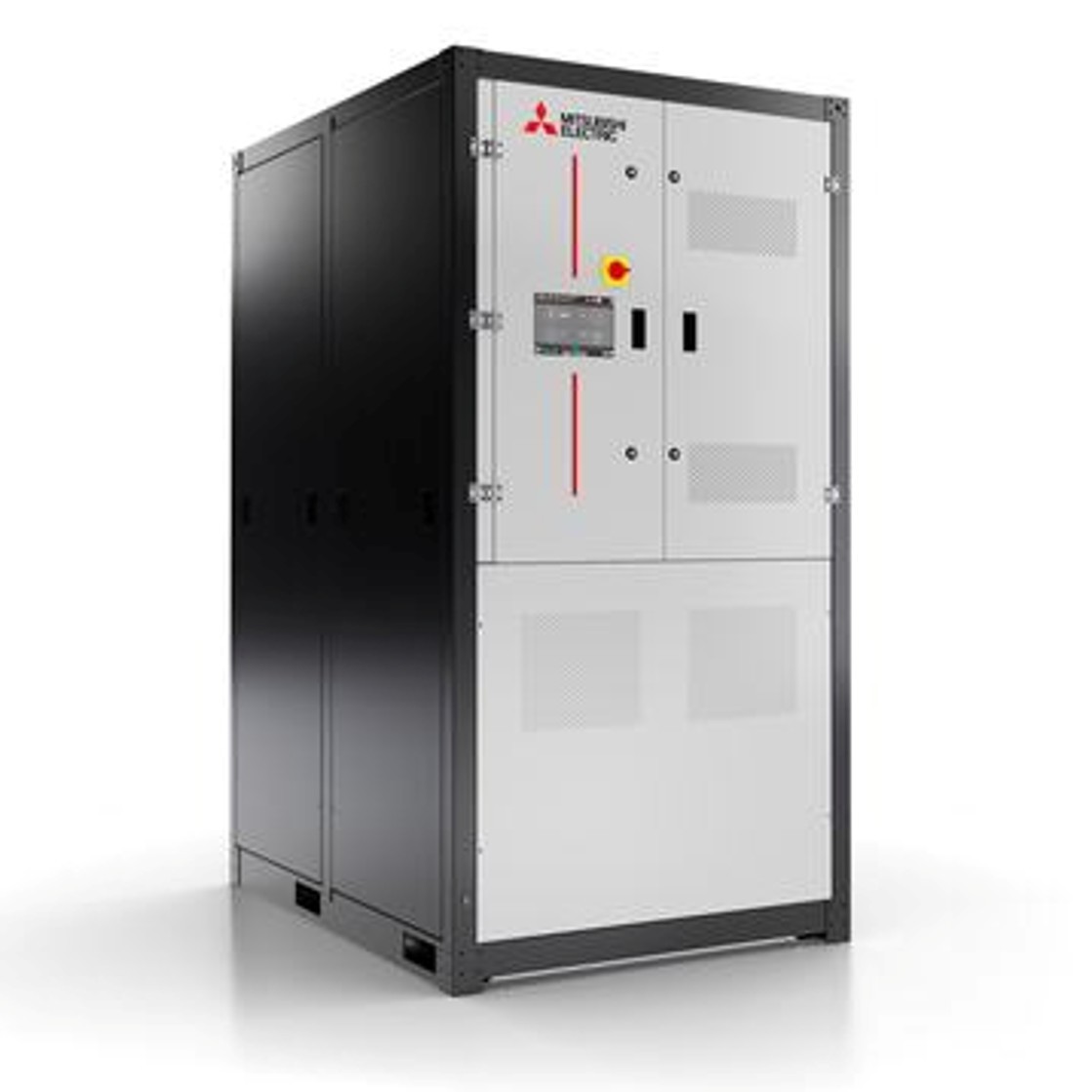
Mitsubishi launches 1.2MW liquid cooling CDU
Mitsubishi has launched a cooling distribution unit (CDU) for liquid cooling systems.
Mitsubishi Electric this week announced the launch of ME-CDU, offering from 750kW to 1.2MW.
Joining the company’s portfolio of chillers, heat pumps, fan walls, CRACs, and CRAHs, Mitsubishi said the new CDU is available in a single module to integrate with hybrid cooling applications and heat reuse or rejection systems. The company said the CDU offers opportunities for heat reclaim and reuse.
“The move from air-cooled systems to predominantly liquid-cooled solutions allows for greater heat capture and re-use, and this is where many data center operators are realizing that there is the potential for a new revenue stream from feeding into local heat networks around the data center,” said Shahid Rahman, EMEA data center strategic account lead for Mitsubishi Electric.
The system features a dual hydraulic circuit separated by a plate heat exchanger.
The primary circuit incorporates a two‑way valve and 500‑micron filtration, while the secondary circuit includes N+1 redundant pumps, 25‑micron fine filtration, redundant temperature and pressure sensors, and an automatic refill tank to maintain stable pressure even in the presence of micro‑leaks.
Crestchic launches loadbank to test liquid-cooled data center infrastructure
Crestchic has launched a new loadbank designed to test liquid-cooled data center infrastructure.
The company, a manufacturer and provider of load bank solutions, last week announced the launch of its 600kW Liquid Cooled offering.
Loadbanks are electrical test equipment used to simulate an electrical load in order to test systems without connecting to a normal operating load. In data centers, they can be used to test electrical systems ahead of commissioning as well as for maintenance.
Available for both sale and rental, the company said the single-vessel loadbank has been purpose-built to meet precision cooling needs, delivering accurate thermal validation and precision electrical testing of liquid-cooled infrastructure at scale.
The Loadbank delivers up to 648kW at 415V and is able to maintain a temperature accuracy of ±0.5°C, regardless of flow variation.
Crestchic said its testing software supports real-time monitoring, automatic load profiling, and clustering of up to 240 loadbanks for hybrid air-cooled and liquid-cooled test configurations.
Founded in 1983, UK-based Crestchic offers stackable 200kW loadbanks for data center testing, DC loadbanks, server emulator loadbanks, and a trailer-based loadbank for data center testing.
KKR in talks to divest liquid cooling provider CoolIT
Investment giant KKR is reportedly looking to offload data center cooling provider CoolIT.
The Financial Times reports the private equity firm is working with advisers on a sale of liquid cooling company CoolIT Systems on a deal potentially exceeding $3 billion.
Multiple buyers have reportedly been earmarked as potential bidders.
The process is in the early stages and there are no guarantees of a sale, according to reports.
The companies involved declined to comment.
Founded in 2001, CoolIT designs, engineers, and manufactures advanced liquid cooling solutions for the data center and desktop markets, including its split-flow direct liquid cooling technology
KKR acquired the firm in 2023 for an undisclosed amount.
CoolIT had previously raised around $10 million over four funding rounds. Previous investors include the Business Development Bank of Canada, nVent, Kline Hill Partners, Vistara Capital Partners, Inovia Partners, AVAC Group, and Chart Venture Partners.

Oracle/OpenAI drop plans to expand flagship Abilene Stargate site, Meta in talks to pick up Crusoe capacity with Nvidia's help
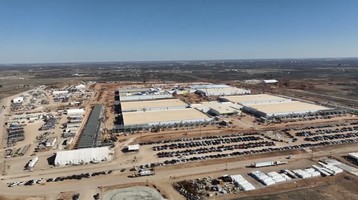
Oracle and OpenAI have canceled plans to expand their flagship Abilene Stargate data center campus.
The project is developed by Crusoe on Lancium's Clean Campus in Texas, and is the first Stargate project to go live since the '$500 billion' joint venture was announced last year. The facilities are operated by Oracle for OpenAI use.
Two data center buildings launched last September, with six more due this year for a total capacity of around 1.2GW. The two companies were then expected to grow the site to 2GW.
However, Bloomberg reports, this expansion has been canceled. Plans were complicated by financing challenges and OpenAI’s frequently changing demand forecasting and shifting view of Stargate.
At the same time, a multi-day outage this year that was caused by winter weather impacting some of the liquid cooling equipment reportedly damaged relations between OpenAI and Crusoe.
The Information reports that power will also not be ready at the site for a year, by which point OpenAI hope to deploy Nvidia Vera Rubin chips instead of the Blackwell GPUs going to Abilene, so would rather do so at a new campus.
Fellow Stargate backer SoftBank is also turning to debt to fund OpenAI's expansion, and is currently seeking $40bn in loans.
As for the Abilene site, GPU giant Nvidia has stepped in to try to help Crusoe lease the remaining capacity to Meta.
In an unusual move aimed at ensuring a rival chip designer's product does not end up in data centers at the site, the company has reportedly paid a $150 million deposit to Crusoe to secure the site and is in talks with Meta.
A deal between Crusoe and Meta has yet to be signed.
Industrial firm Alfa Laval enters data center market with liquid cooling system
Swedish industrial firm Alfa Laval is entering the data center market with a new liquid cooling system.
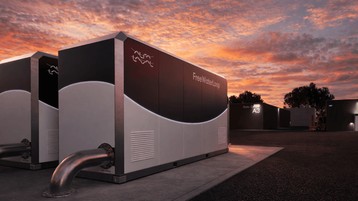
The company this week announced the launch of FreeWaterLoop, an external cooling system for the data center facility loop.
The liquid-based cooling system reportedly combines advanced pump engineering, high-performance heat exchanger technology, and filtration into one single fully integrated system.
Alfa Laval said the system harnesses the stable temperatures and heat transfer capacity of natural water sources, and minimizes net water consumption and returns water to its origin. The FreeWaterLoop is said to reduce the physical plant footprint of facility cooling as it occupies less space than air-based systems.
Founded in 1883, Alfa Laval is a Swedish manufacturing and engineering company. It serves the marine, energy, and food & water sectors, providing boilers, valves, pumps, heat exchangers, and other components. It also offers gasketed plate heat exchangers.
Radian Arc and Blacknut launch GPU cloud in Vietnam
AI cloud provider Radian Arc is teaming up with VNPT, COMIT, and Blacknut to launch its GPU platform in Vietnam.
The platform will support Blacknut's cloud gaming service and offer access to AI technologies.
VNPT - the Vietnam Posts and Telecommunications Group - and its partner Comit Corp will assist with the deployment in the country.
“With VNPT’s market reach and Blacknut’s premium gaming catalog, we’re bringing the next generation of interactive entertainment and computing directly to Vietnam’s 5G users,” said David Cook, CEO of Radian Arc. “Cloud gaming is often the first large-scale consumer application of Edge GPU infrastructure, and it creates the foundation for broader AI and enterprise services built on the same sovereign platform.”
VNPT's customers will be able to stream and play more than 1,000 PC and console-quality games from Blacknut's catalog on their devices without investing in additional hardware.
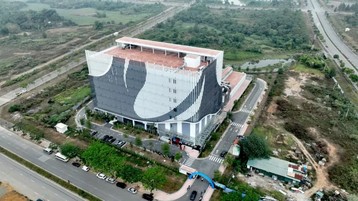
VNPT operates multiple data centers across Vietnam. According to the company's website, it has eight data centers spread across all three regions in the country. Among those is the VNPT IDC Hoa Lac facility in Ha Tay Province, which was launched in October 2023.
Radian Arc, previously known as a provider of an infrastructure-as-a-service (IaaS) platform for running sovereign, telco-focused GPU cloud services, was acquired by Sumber in February 2026 and combined with the cooling provider's recently-launched InferX AI cloud platform.
Elon Musk's xAI to spend $659m on new building for Memphis data center cluster
Elon Musk’s AI company xAI wants to spend $659 million on a new building at one of its data centers outside Memphis, Tennessee.
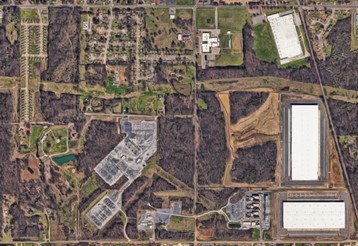
It has requested a new construction permit for a 312,000 sq ft (28,985 sqm) building at 5414 Tulane Road, a 79-acre land parcel adjacent to the company’s Colossus 2 data center.
Permit documents, filed with the Memphis and Shelby County Division of Planning and Development, say the four-story building will be 75 feet high, but what exactly it will house has not been revealed. News of the filing was first reported by Memphis Business Journal.
xAI uses its data centers in Tennessee to power its Grok AI chatbot. The company came to Memphis in 2024, launching its Colossus supercomputer in a new data center housed in a former Electrolux factory in Memphis’s Boxtown district.
It purchased the site for Colossus 2 last March, and the data center came online in January. Despite Musk claiming it offered 1GW of capacity at launch, satellite imagery taken in January reportedly showed it had cooling equipment installed capable of managing 350MW.
A third data center is in the works, located just across the state boundary in Mississippi. Musk says his company, which is now part of SpaceX, will eventually have access to 2GW of compute power from the cluster.
TikTok experiences issues at US data center, but avoids full outage
TikTok is experiencing some issues with an Oracle data center in Ashburn, Virginia.
The social media platform posted on X yesterday, March 3, writing: "An issue with an Oracle data center is impacting some parts of the TikTok US user experience. Creators may temporarily experience lags in posting content while Oracle works to resolve the issue. We appreciate your patience and understanding and will keep you updated.“
Oracle, meanwhile, added that the company had seen reports from customers that they were "intermittently experiencing connection timeouts, errors, and increased latency" with its data center in Ashburn, Virginia.
The issues, Oracle states in an event analysis, were related to the Oracle Cloud Network Infrastructure. Problems began at 13:24 UTC on March 3, and were resolved by 09:18 UTC on March 4.
According to the company's status page, all systems are now operational.
This is not the first issue TikTok has experienced since the official establishment of its TikTok USDS JV, which was finalized in January of this year. Just one week after being formalized, an Oracle data center suffered a power outage.

Glass-walled Edge data center dubbed the 'Fish Bowl' proposed for South Miami-Dade, Florida
A glass-enclosed data center dubbed the 'Fish Bowl' will form part of a planned technology campus in Miami-Dade, Florida.
Remergify and Farrington Capital Group want to build ReadySetFundGrow (RSFG) to serve small businesses, entrepreneurs, healthcare providers, and technology startups across South Miami-Dade - a community said to lack access to modern digital infrastructure.
Should it be developed, the campus will be located in the city of Homestead on a 20,000 sq ft (1,858 sqm) plot adjacent to the US-1 highway.
The Fish Bowl will be a “glass-enclosed, 10-rack micro-data center offering secure, HIPAA-ready colocation, low-latency Edge computing, and managed IT services for local healthcare, legal, logistics, and fintech companies,” the developers said.
Planned capacity has not been disclosed, but on its website, RSFG claims it will offer access to AMD Instinct MI300X GPUs. It is not known if the Fish Bowl will feature liquid cooling.
Investment firm Farrington Capital, which backs projects in the South Miami-Dade area, is the lead investor in the project, though it is seeking $1 million in additional funding to help cover build costs. It will be managed by Remergify, which describes itself as a technology and business development co-venture partner.
The partners say no such data centers exist in the area, meaning businesses have to route information via Miami itself, 30 miles away.

Leave A Reply