



BLOG

Ecolab to pay $4.75bn for liquid cooling specialist CoolIT
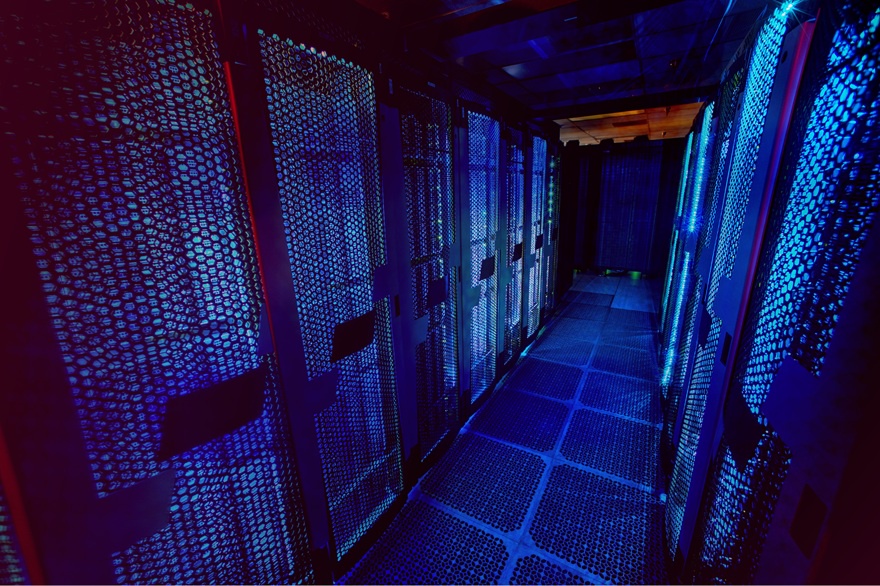
Water monitoring and treatment firm Ecolab is set to buy liquid cooling vendor CoolIT Systems for $4.75 billion.
The deal is set to close later this year. CoolIT is currently owned by funds managed by investment firm KKR.
Ecolab said CoolIT is likely to generate $550m in sales over the next 12 months, with data center operators around looking to kit out their facilities with liquid cooling solutions suitable for chilling high-density AI racks.
The deal will double the size of Ecolab’s addressable market in the space, from $5 billion to $10 billion, a statement announcing the deal added.
CoolIT designs, engineers, and manufactures advanced liquid cooling solutions for the data center and desktop markets, including its split-flow direct liquid cooling technology
KKR acquired the firm in 2023 for an undisclosed amount, and news that it was looking to sell first emerged earlier this month. The Wall Street Journal was first to report that Ecolab had won the race to purchase the vendor.
Founded in 1923 to sell carpet cleaning products, NYSE-listed Ecolab provides water treatment and monitoring products and services across industries, including food, healthcare, hospitality, and manufacturing.
The company, via its Nalco Water unit, offers 3D TRASAR water monitoring products for cooling water for cooling towers and chillers, and adiabatic cooling to optimize direct evaporative cooling systems. It launched a data center-centric version for liquid cooling in 2025, and launched its own liquid cooling portfolio in November.
Liquid cooling vendor Frore Systems raises $143m at $1.6bn valuation
Frore Systems has raised $143 million in a Series D funding round that values the liquid cooling vendor at $1.64 billion.
The new funding will accelerate the scale-up of Frore’s LiquidJet, LiquidJet Nexus, and AirJet products for data center and Edge deployments.
California-based Frore has now raised $340 million in total, and the Series D round was led by MVP Ventures, with participation from Fidelity Management & Research Company, Top Tier, Mayfield Fund, Clear Ventures, Addition, Qualcomm Ventures, StepStone Group, and Alumni Ventures.
Frore started life developing air cooling systems for mobile devices like smartphones that can’t accommodate a fan, and has more recently moved into liquid cooling for data centers.
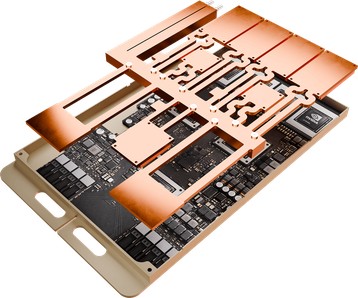
Last week, it released LiquidJet Nexus, an integrated liquid cooling system for AI data centers. The company’s cold plate is designed using semiconductor manufacturing processes and is built to map the shape of chips such as Nvidia GPUs. Frore says this enables it to cool the chip’s hotspots more efficiently than standard coldplates.
By integrating this cold plate with the other components required to deliver the coolant, Frore claims it can eliminate the need for the hoses, connectors, and manifolds usually found in liquid cooling systems. This should unlock efficiency benefits and enable higher rack density.
South Korea’s SDT opens Quantum-AI data center, deploys 20-qubit quantum computer integrated with Nvidia DGX B200 hardware
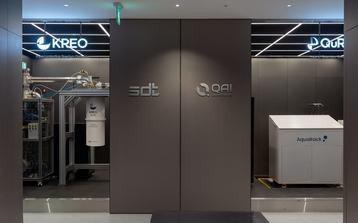
South Korea’s SDT Inc. has opened its Quantum-AI Hybrid Data Center in Seoul's Gangnam district — billed as the country’s first commercial quantum computing facility.
The company has also deployed a 20-qubit superconducting quantum computer dubbed Kreo at the facility, integrating the system with Nvidia DGX B200 hardware using the chip designer’s NVQLink platform.
The Kreo and Nvidia B200 systems are integrated in an immersion-cooled environment using SDT’s AquaRack system. Using single-phase immersion fluid, the company claims AquaRack can cut cooling power loads by up to 90 percent while delivering up to 45kW per 21U rack.
The deployment marks the first time that Korea has seen a commercial hybrid quantum‑classical system be deployed in an industrial data center environment instead of a national lab, the company said in a LinkedIn post.
SDT went on to add that the Quantum-AI Hybrid Data Center is the culmination of the company’s proprietary full-stack QDM (Quantum Design & Manufacturing) capabilities, which encompasses hardware design, fabrication, system integration, and operating software.
By combining its Qubit Controller Unit (QCU) – which provides high‑fidelity multi‑qubit control and readout for Kreo – with Nvidia hardware, STD said it has created “low-latency workflows for chemistry simulation, portfolio optimization, and logistics applications.”
LRZ decommissions CoolMUC-3 supercomputer after almost decade of use
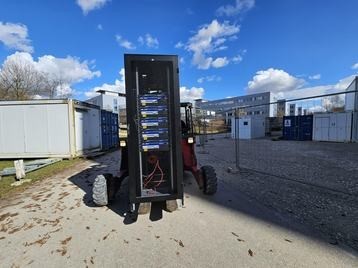
Germany’s Leibniz Supercomputing Centre has retired its CoolMUC-3 cluster after almost a decade of use.
First deployed in 2017, the system consisted of nine server racks containing Intel Xeon Phi processors, providing 400 teraflops of compute power.
Designed for fluid dynamic simulation, throughout its lifetime, the CoolMUC-3 system supported universities across Bavaria, including the Technical University of Munich and the Ludwig Maximilian University of Munich.
The cluster was directly cooled with hot water-based liquid cooling technology developed by Megaware and known as ‘ColdCon.’ In a post on LinkedIn, Megaware said that at the time of the supercomputer’s installation, it was the world’s first high-performance computing (HPC) system with almost 100 percent direct hot-water cooling, with an inlet temperature of at least 40°C (104°F).
In addition to providing the cooling technology, Megaware also saw the decommissioning of CoolMUC-3. The company said in addition to disposing of systems in an “environmentally responsible” way, it also reuses suitable component parts, where possible.
Euro HPC JU signs contract with HPE to deploy Hammer HAI supercomputer at HLRS in Stuttgart, Germany
The European Union's European High-Performance Computing Joint Undertaking (EuroHPC JU) has signed a contract with HPE to deploy a new AI-optimized supercomputer dubbed HammerHAI in Stuttgart, Germany.
The system will be housed at the High-Performance Computing Center Stuttgart (HLRS) and will be used to support artificial intelligence, machine learning, and data science workloads.
Manufactured and installed by HPE, HammerHAI will be based on liquid-cooled Nvidia GB200 NVL architecture and interconnected by Nvidia Quantum-X800 InfiniBand technology. Set to offer 15 exaflops of AI compute performance, the system will also integrate Vast Data’s DASE (disaggregated, shared-everything) storage architecture and have a partition powered by AI inferencing hardware from Netherlands-based Axelera AI.
Delivery of the HammerHAI supercomputer is scheduled for the second quarter of 2026, with the system expected to go into operation in the second half of 2026.
The system will be the first AI-optimized supercomputer to be deployed under the European Union’s AI Factories initiative. The HammerHAI AI factory opened in April 2025 and provides test access to AI compute capabilities, inference services for LLMs, AI training courses, and guidance on AI ethics and risk management.
Dr. Bastian Koller, managing director of HLRS and lead coordinator of HammerHAI, added: “The contract signing for this new, AI-optimized system marks a new chapter in HammerHAI’s development. We invite future users of the system to begin preparing their datasets, algorithms, and workflows now. This will make it possible to begin taking advantage of the system’s powerful new capabilities as soon as it becomes available.”
Vertiv to acquire ThermoKey, expanding heat rejection portfolio for converged physical infrastructure
COLUMBUS, Ohio [March 23, 2026] - Vertiv (NYSE: VRT), a global leader in critical digital infrastructure, today announced it has entered into an agreement to acquire ThermoKey S.p.A., a leading provider of heat rejection and heat-exchange technologies with long-standing relationships across original equipment manufacturers (OEMs) and system integrators, as part of Vertiv’s continued investment in advanced cooling solutions to support high-density AI data centers.
Upon closing, the acquisition is expected to expand Vertiv’s thermal management portfolio and manufacturing capabilities, particularly in EMEA, and strengthen its ability to deliver comprehensive solutions across the end-to-end thermal chain for AI factories and high-density data centers.
Founded in 1991 and based in Italy, ThermoKey brings more than three decades of engineering and manufacturing experience in heat exchangers for data center cooling and other demanding applications.
ThermoKey’s in-house design and production capabilities, together with its portfolio of heat exchangers, dry coolers, air cooled condensers, and liquid cooling systems, are expected to enhance Vertiv’s broader thermal technology base and manufacturing flexibility. In addition, ThermoKey’s available production capacity is expected to support Vertiv’s ongoing thermal portfolio expansion and help address elevated customer demand in critical thermal infrastructure categories.

Leave A Reply